Menu
Date Published: April 6, 2023 (Updated September 23, 2026)
Table of contents :
The best payday loans in Canada share three things: the lender is licensed in your province, the full cost of borrowing is disclosed upfront, and the funding timeline is stated plainly. All three are checkable before you sign. Most advertised claims are not.
That's the short answer, but the longer one takes more digging. Payday lenders in Canada operate under both federal and provincial rules, and the fine print matters more than the marketing.
Every licensed lender has to disclose its cost per $100 borrowed. Payday loans use a flat fee rather than an annual interest rate, which makes them easier to compare than personal loans, where advertised rates, terms and origination fees all vary. A lender promoting rates that look dramatically different from the legal maximum, in either direction, is worth a second look.
Below we'll walk through what actually separates a trustworthy payday lender from one that isn't, so you can compare your options against real criteria instead of guesswork.
Key Takeaways

Every payday lender operating legally in Canada must hold a licence in the province where you live, and the licence number should be visible on its website.
The maximum cost of borrowing is $14 per $100 advanced. That's a federal cap, and no licensed lender can charge above it.
Payday loans charge a flat fee, not compounding interest, so there is no annual interest rate accruing over the term.
Licensed lenders must verify your ability to repay, so "no credit check, ever" is a claim to scrutinise rather than a feature.
Funding speed depends on the method. A transfer can arrive in minutes; other methods can take a business day or longer.
The best option for a small, short-term gap is rarely the best option for a large amount repaid over years. Match the product to the need.
Every payday lender operating legally in Canada has to hold a licence in the province where you live. This isn't optional and it isn't a formality. Provincial regulators set the rules lenders must follow, covering maximum fees and rates, cooling-off periods, disclosure, and how collections work.
Checking a licence takes a couple of minutes. Look for a licence number posted on the lender's website, usually in the footer or on an about page, then cross-check it against your province's public registry. Ontario, Alberta and British Columbia all keep searchable lists online. The Financial Consumer Agency of Canada also publishes a province-by-province resource on payday lending rules and licensing.
If a lender doesn't display a licence number, or gets vague when you ask, treat that as a clear warning sign. A licensed lender has nothing to hide here, because the licence is what lets them operate at all.
This matters more with online loans than with a storefront. The federal government warns that dealing with lenders based outside Canada makes problems harder to resolve if something goes wrong.
iCash is operated by Finabanx Ltd. and holds payday-lending licences in seven provinces: Alberta, British Columbia, Manitoba, New Brunswick, Nova Scotia, Ontario and Prince Edward Island. The licence number and expiry date for each province appear in the footer of every page on this site, so you can check them against your provincial registry exactly as you would with any other lender.
iCash does not lend outside those seven provinces.
Want to learn more about spotting red flags beyond licensing? See our guide to the warning signs of lending scams, and our fraud protection FAQs for how to verify a lender before sharing bank account information.
The maximum cost of borrowing on a payday loan is $14 per $100 advanced. That limit comes from the federal Criminal Interest Rate Regulations and applies alongside each province's own payday-lending rules. A licensed lender cannot charge more than the applicable maximum, so use that figure as your benchmark when comparing offers.
Here's what three loan amounts cost at $14 per $100:
Loan amount | Cost at $14 per $100 | Total repayment |
$300 | $42 | $342 |
$500 | $70 | $570 |
$700 | $98 | $798 |
The fee is flat. It doesn't compound, and no interest accrues day by day the way it does on a credit card balance or a personal loan. That's the main reason payday loan costs are easier to compare than advertised interest rates on longer products.
Provincial law also requires APR disclosure, and the figures differ by province and term:
Province | APR |
Ontario | 365% on a 14-day term; 82.42% on a 62-day term |
Nova Scotia | 365% on a 14-day term, single repayment only |
Prince Edward Island | 365% on a 14-day term; 82.42% on a 62-day term |
Alberta | 82.42% on a 62-day term, repaid over 2 to 7 payments |
Those rates look large because APR annualises the cost of a loan that only lasts weeks. Both figures describe the same loan, and a lender should be willing to show you both. iCash charges $14 per $100 across all seven provinces where it lends, which is the applicable maximum.
What should catch your attention is a "promotional rate" that doesn't match the agreement you actually sign. If a lender advertises one figure and the contract shows another, that's a transparency problem, not a rounding error. Get familiar with the terms lenders use before you read a loan agreement, and with your rights as a payday loan borrower.
Want to run your own numbers? Use our payday loan cost calculator to see the total repayment on any amount you're considering.
It depends entirely on how the lender sends the money. A transfer can land within minutes of approval, while other funding methods can take a business day or longer. That's the biggest source of variation between lenders, and "fast" on a homepage banner tells you nothing about which end of that range you're at.
So ask two specific questions before you apply: how are funds sent, and how long does it typically take. A lender that can't answer both plainly is a lender whose timeline you're guessing at.
iCash sends funds by Interac e-Transfer®, and most approved applications receive money within about two minutes of signing. The transfer itself is fast, but when it lands in your bank account also depends on your own bank's processing, which is partly outside any lender's control.
Most licensed lenders run a credit check on your first application, then weigh your income and banking history more heavily than your credit score when deciding. Both matter, but not equally, and the balance differs from what a bank applies to a personal loan.
That's why payday loans can work for people with bad credit, as long as steady income is coming in. A bad credit history doesn't automatically rule you out the way it might on a personal loan, where the score often drives both approval and the interest rate you're offered.
It's worth reading the specific eligibility rules before you apply rather than after. What you need to qualify varies somewhat by province, but the core requirements are consistent: a minimum income, a recent income history from the same source, and an active online bank account.
Don't read "no credit check" as meaning a lender won't verify your information at all. Licensed lenders are required to assess whether you can repay, so some form of verification always happens. Claims of absolutely no verification should make you cautious, because a lender assessing nothing isn't assessing affordability either.
At iCash, a credit check runs on your first application only. Every loan after that is exempt, provided your account stays in good standing. You can also check your credit score for free before applying anywhere, which is worth doing if you don't know where your score currently sits.
Approval is not guaranteed and conditions apply. iCash only offers one loan at a time.
Payday loans are one product among several, and the best choice depends on the amount you need and how long you need to repay it. A small gap before your next pay is a different problem from a $15,000 expense spread over years, and the products that suit each are not interchangeable.
Option | Typical amount | Cost structure | Term | What's checked |
Payday loan | Up to $1,500 | Flat fee of $14 per $100 | Days to 62 days | Income, banking history, one credit check |
Personal loan | $500 to $50,000 | Annual interest rate, sometimes an origination fee | Months to years | Credit score, income, debt load |
Line of credit | Varies by lender | Interest on the balance drawn | Revolving | Credit score, income |
Credit union loan | $500 to $10,000 | Lower interest rates than most alternatives | Months to years | Credit, income, membership |
Secured loan | Larger amounts | Lower rates in exchange for collateral | Years | Credit, income, the asset itself |
Cash advance app | $20 to $500 | Subscription, tips, or express transfer fees | Days to weeks | Bank account activity |
A personal loan is the better tool when the amount is large and you need years rather than weeks to repay. Interest accrues over the term, so the total cost depends on how long you carry the balance, and approval usually leans on your credit score. Some lenders also charge an origination fee that isn't included in the advertised rate.
A line of credit or an instalment loan sits between the two, and both generally cost less than short-term borrowing if you can qualify in advance. If you're carrying multiple balances, a debt consolidation loan may reduce the total interest you pay rather than adding another repayment on top.
To be clear about scope: iCash offers payday loans up to $1,500 and does not offer personal loans, lines of credit, or secured loans. The comparison above is here so you can rule a payday loan in or out honestly, not to steer you toward it.
Comparing lenders against each other is a normal step, not a sign you shouldn't trust any particular one. Once you've settled on the type of loan, the differences between providers come down to cost, funding method, approval process and service.
When you compare, look past the advertised price:
Cash advance apps may use subscriptions, optional tips or express transfer fees, so work out what an advance actually costs rather than assuming it's free. Our guide to cash advance apps in Canada covers how the pricing models differ.
Credit unions can sometimes lend at lower rates, but approval may take longer and you may have to join first.
Other licensed payday lenders may charge roughly the same $14 per $100, while offering a very different application and funding experience.
Banks rarely offer loans this small, and a personal loan application can take days to process.
It's worth comparing iCash to other lenders and apps before committing to any one option. That comparison is how you confirm you're getting a fair deal rather than just a convenient one.
Review volume is one of the few criteria you can verify without taking a lender's word for it. Independent review platforms show you how a lender behaves after the money arrives, which is the part no marketing page covers.
iCash has been reviewed by tens of thousands of Canadian customers. You can read the full picture, including the criticism, on our reviews page. Whatever lender you're considering, look at recent reviews rather than the overall score alone, and pay attention to what people say about repayment and customer service rather than approval speed.
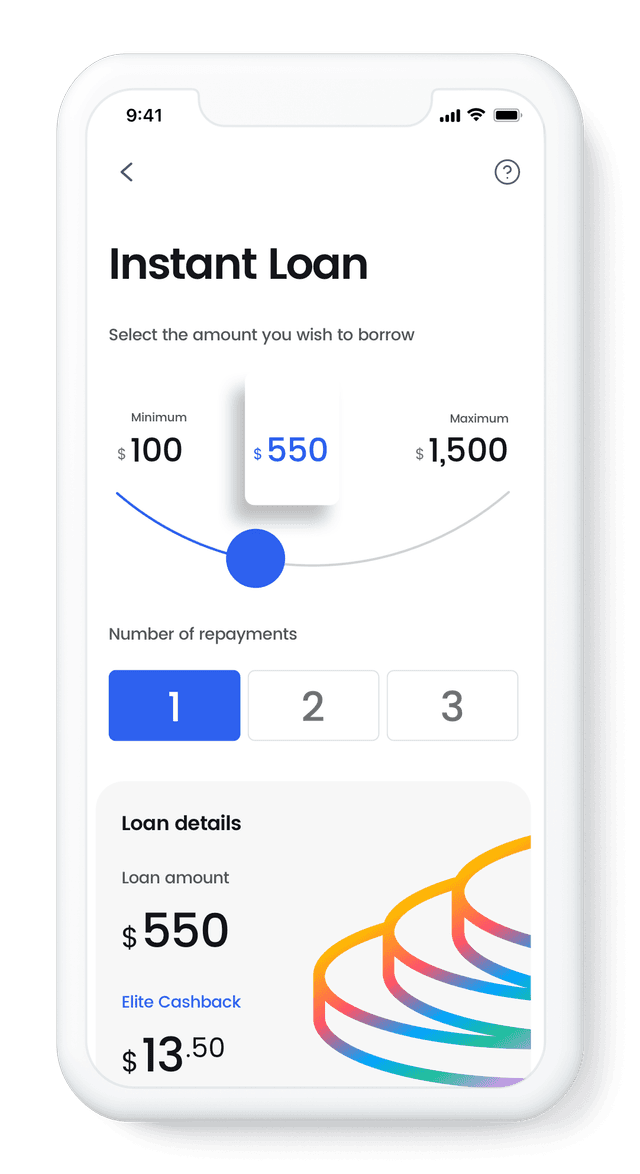
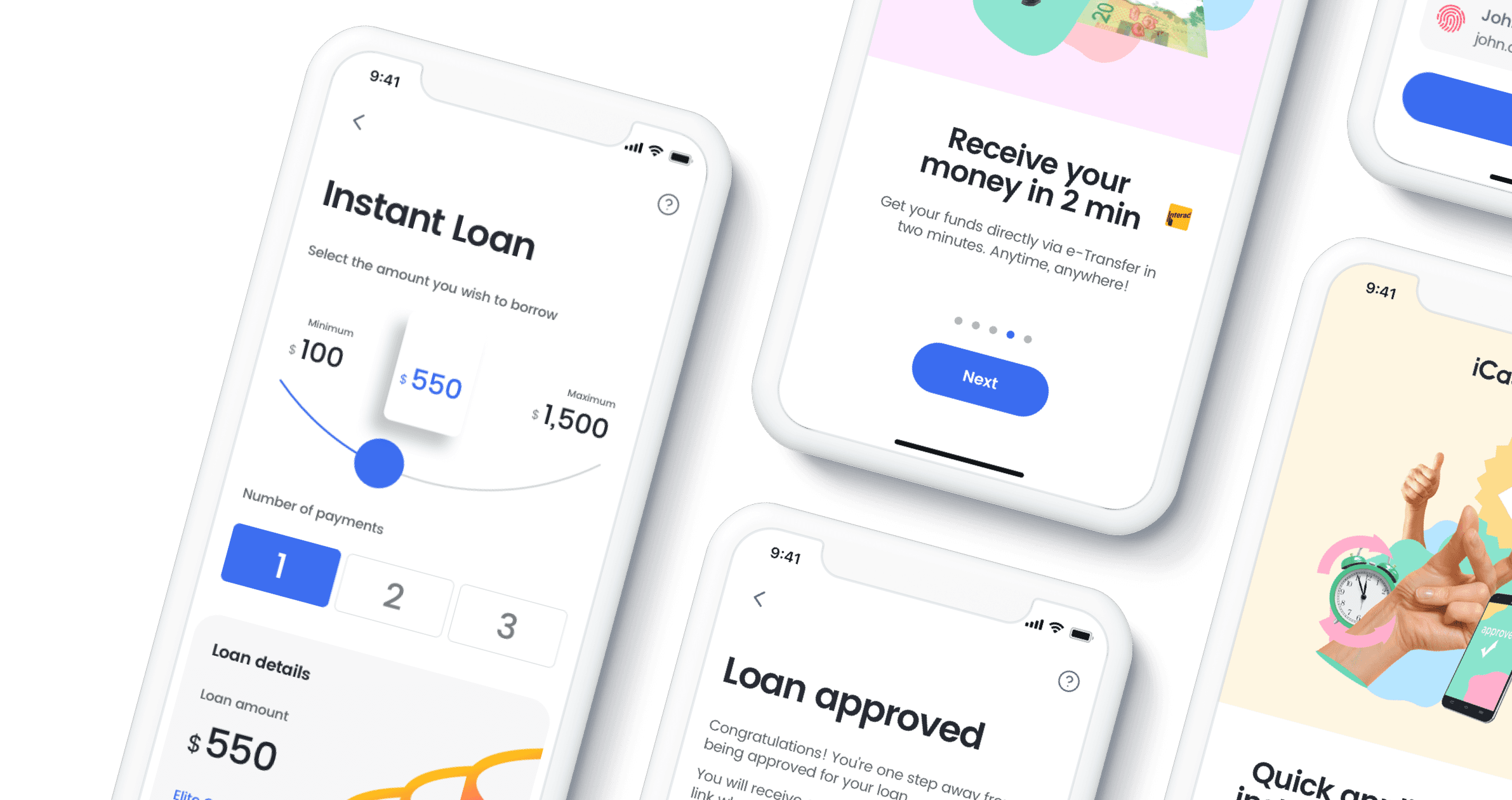
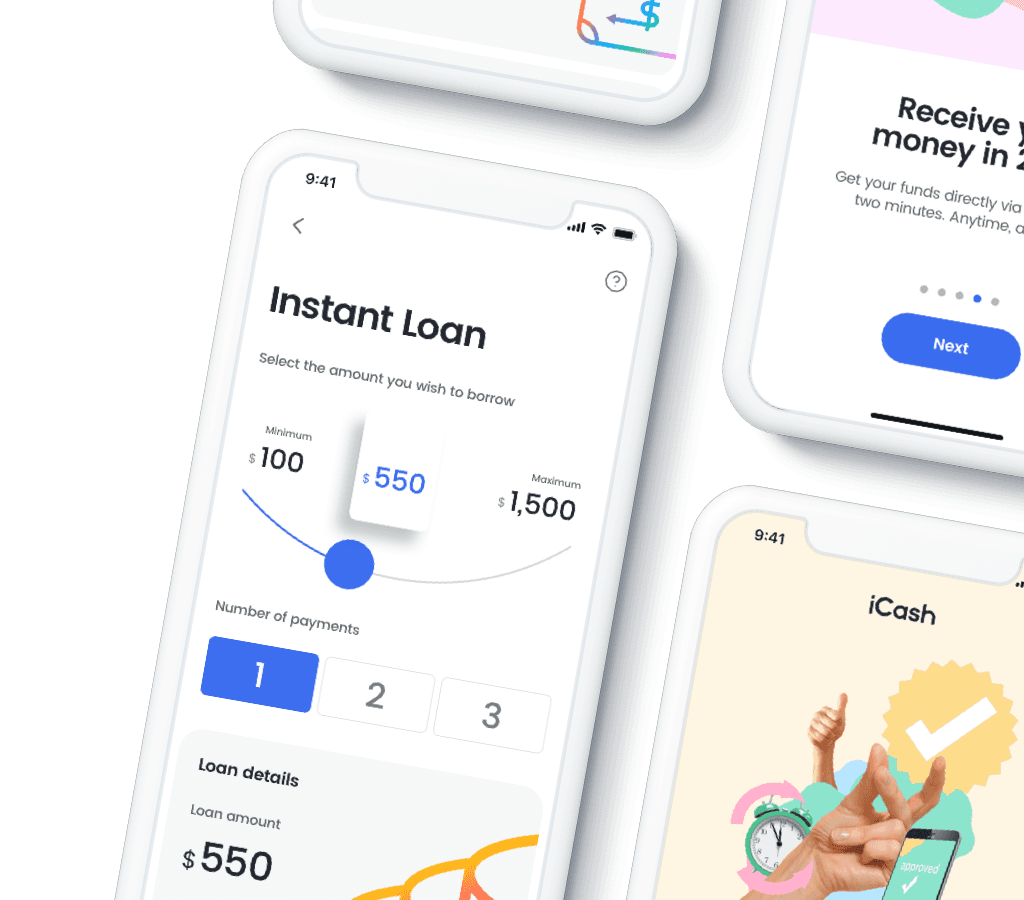
Getting an online loan with us is fast and easy. Simply select your loan amount, repayment plan* and provide some personal details.
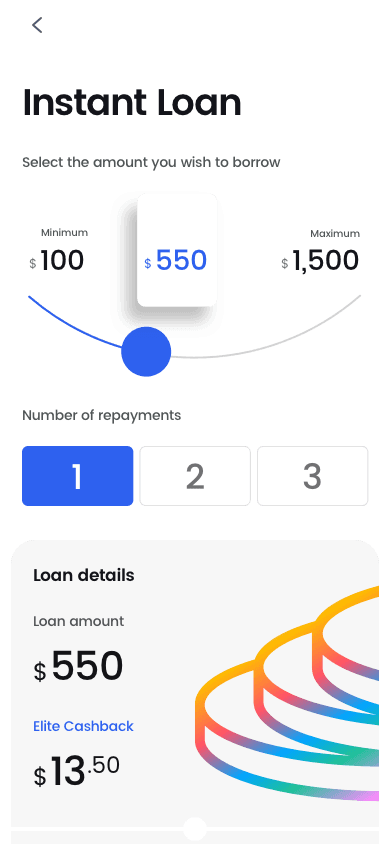
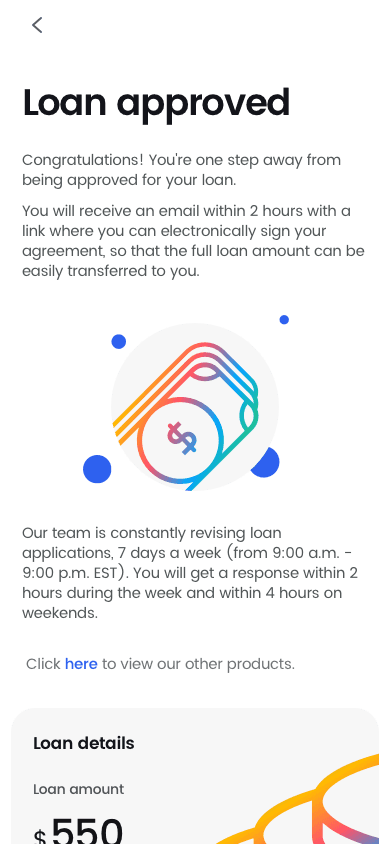
Our online loan application will tell you if you’re approved instantly. Once approved, all you have to do is electronically sign your contract. It’s that easy!
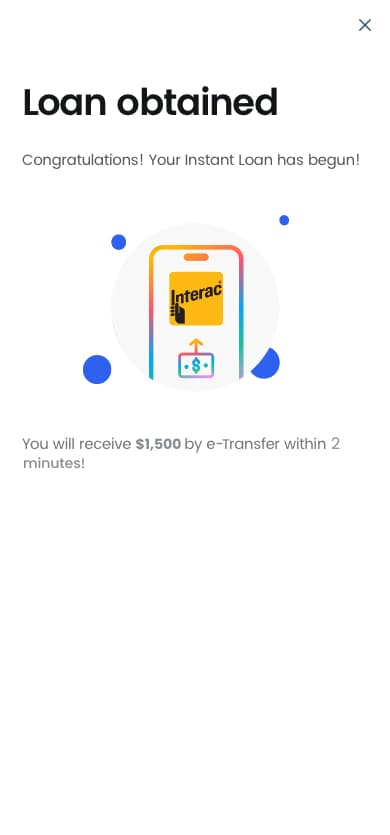
Once you sign your digital agreement, your cash advance will be sent by Interac e-Transfer within 2 minutes. Fast, convenient and hassle-free. Funds are sent 24/7, no matter what.
A payday loan can fill the gap when an unexpected expense lands shortly before your next paycheque. That could be a car repair you can't postpone, an urgent household bill, or a payment due before your regular income arrives. If it's a one-time shortage and you know you can manage the repayment, short-term borrowing may be a practical option.
Take a different approach when the shortage keeps happening. If you need to borrow every month, or you're using a new loan to deal with existing debt, look at alternatives before adding another repayment to your budget. A credit union may offer a lower-cost loan, your biller may agree to a payment arrangement, or a credit counsellor can help you review your options at no cost. Payday loans are better saved for occasional needs than used as a regular source of extra cash.
If you're still deciding whether this type of loan fits, our overview of what a payday loan is is a good place to start. If you decide to move forward, our guide to borrowing responsibly covers how to plan repayment before you sign.


Since 2016, we've helped over 1.6 millions Canadians get instant loans online.
Since 2016, we've helped over 1.6 millions Canadians get instant loans online.
Read more reviews.
Have more questions? Check out our full FAQ.